
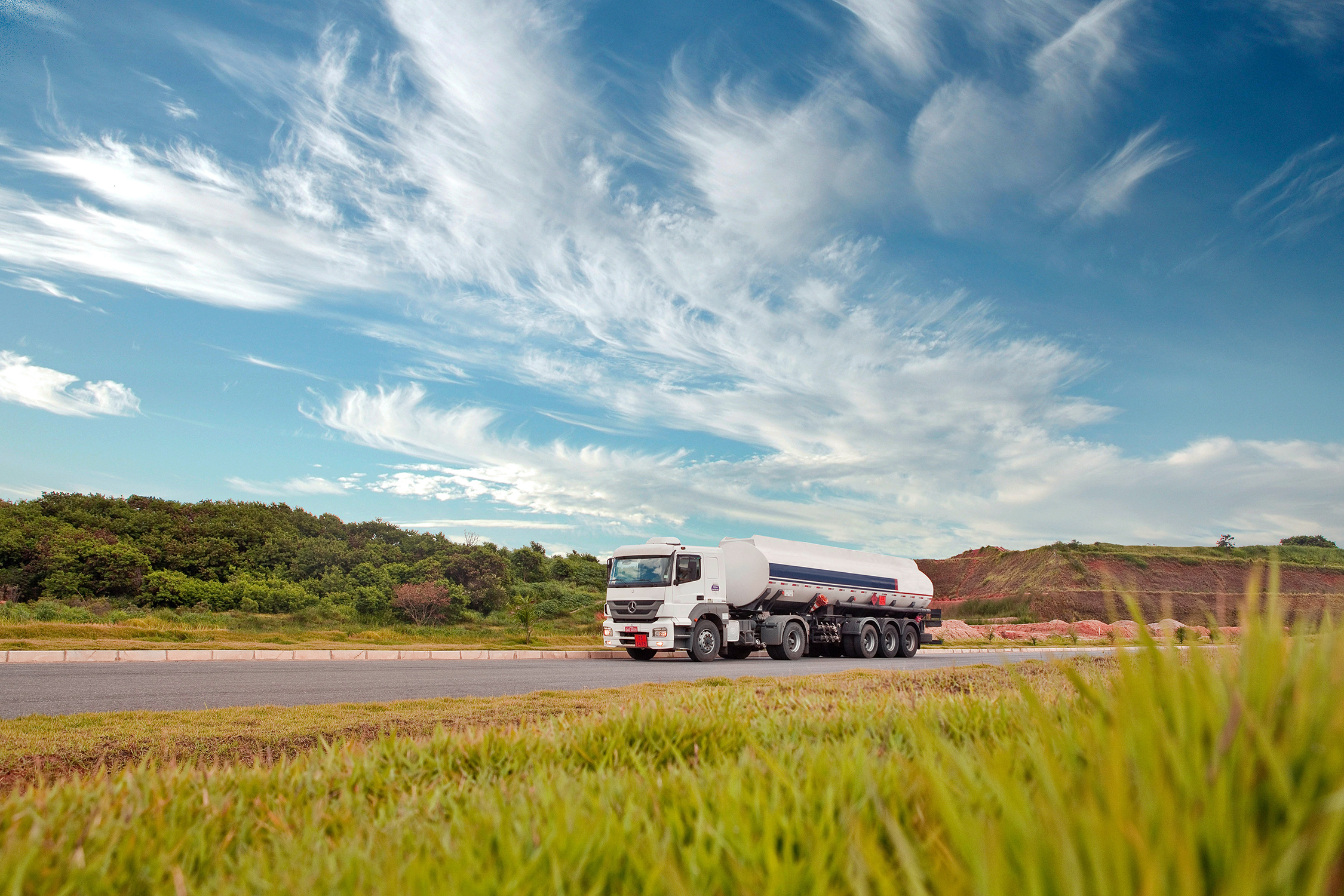
LPG is a fossil fuel consisting of a mixture of propane and butane and is stored in a liquid phase. Liquefaction reduces the volume of gas by 250 times compared to standard low-pressure conditions, resulting in savings in transport and storage costs and greater efficiency in the energy production process.

LPG, thanks to its characteristics, is able to satisfy the energy needs of users in all those areas that are not reached by the natural gas network.
PetroGaz, thanks to a widespread and exceptional network and its efficient services with 12 depots allover Greece, can bring an economical, safe and ready to use fuel everywhere, from your home to your company.

LPG is a versatile energy source that can offer environmental advantages in certain applications compared to other fossil fuels. In particular, when burned, LPG can produce lower CO₂ emissions per unit of energy compared to coal and oil, while it may also reduce emissions of certain air pollutants, such as sulfur dioxide and particulate matter, depending on the application and combustion technology.
Supporting evidence: (1)
LPG
Calorific value
Another important feature is the high calorific value of LPG, as can be seen from the comparison table.
PetroGaz provides LPG in cylinders and small tanks of different capacities to satisfy different needs: a versatile and safe fuel that will allow you to cook, have hot water, heat or cool your place and accompany you in your free time.
PetroGaz offers to all customers a highly specialized support to identify suitable solutions, analysing consumption and energy needs. Thanks to its characteristics, LPG is used in Ho.Re.Ca. (Hotel – Restaurants – Cafes) and in many industrial sectors, from construction to food, from manufacturing to metallurgy.
More consumers are considering LPG as an alternative fuel for automotive use. Depending on the vehicle, operating conditions and fuel consumption, LPG may offer certain emissions-related advantages compared with other fuels.
- Emissions: LPG vehicles may produce lower emissions of certain air pollutants, such as particulate matter, compared with vehicles using some other conventional fuels. The extent of any reduction depends on the vehicle, engine technology and operating conditions.
- Alternative fuel: LPG is an available alternative fuel for compatible vehicles. Its use may help reduce certain tailpipe pollutant emissions compared with other fuels, subject to the vehicle and operating conditions.
Supporting evidence: (2)
Supporting evidence
(1)
-Intergovernmental Panel on Climate Change (IPCC), 2006, Guidelines for National Greenhouse Gas Inventories,
– U.S. Environmental Protection Agency, AP-42, Section 1.5: Liquefied Petroleum Gas Combustion
– U.S. Environmental Protection Agency, AP-42, Section 1.1: Bituminous and Subbituminous Coal Combustion
– The American Chemical Society — A Laboratory Comparison of Emission Factors, Number Size Distributions, and Morphology of Ultrafine Particles from 11 Different Household Cookstove-Fuel Systems
Examples :
a. Heating : In residential heating a comparative European study found that new LPG heating systems had a 20% lower carbon footprint than heating-oil systems. A comparative study of European heating systems found that new LPG heating systems had a 20% lower carbon footprint than heating-oil systems.
(Scientific Study:
Carbon footprints of heating oil and LPG heating systems
Journal: Environmental Impact Assessment Review (2012)
b. In automotive use.
Scientific studies have demonstrated that LPG passenger cars produced lower emissions of CO2 than comparable gasoline and diesel vehicles.
According to the scientific study “Determination of Euro 6 LPG passenger car emission factors through laboratory and on-road tests: Effect on nation-wide emissions assessment for Italy
Journal: Atmospheric Environment: X (2022),
in the tested Euro 6 bi-fuel passenger cars, LPG reduced CO₂ emissions by approximately 7.8%–9.1% compared with gasoline, depending on the driving cycle.
Also, the Joint Research Centre (JRC)–EUCAR–CONCAWE Well-to-Wheels study evaluates energy use and greenhouse-gas emissions across the fuel life cycle, from fuel production and supply (Well-to-Tank) through vehicle operation (Tank-to-Wheels). Under the assumptions of the relevant Well-to-Wheel assessment, LPG-fueled passenger cars were estimated to produce lower CO₂ emissions than comparable gasoline and diesel vehicles.
(Source : Edwards, R., Larivé, J.-F., and Beziat, J.-C. (2011). Well-to-Wheels Analysis of Future Automotive Fuels and Power Trains in the European Context — Report, Version 3c. JRC Scientific and Technical Reports, EUR 24952 EN. Joint Research Centre, European Commission.
Article| May 09, 2017
A Laboratory Comparison of Emission Factors, Number Size Distributions, and Morphology of Ultrafine Particles from 11 Different Household Cookstove-Fuel Systems
Environ. Sci. Technol. (2017) 51 (11): 6522–6532.
Performance and gaseous and particle emissions from a liquefied petroleum gas (LPG) fumigated compression ignition engine (2014)
https://www.sciencedirect.com/science/article/abs/pii/S0016236114004360
In-use emissions from biomass and LPG stoves measured during a large, multi-year cookstove intervention study in rural India, 2021
https://pubmed.ncbi.nlm.nih.gov/33321364
(2)
1. The European Commission’s European Alternative Fuels Observatoty_EAFO, https://alternative-fuels-observatory.ec.europa.eu/general-information/alternative-fuels
2. Ristovski et al. (2005) — particulate matter and CO₂
Study: Particle and carbon dioxide emissions from passenger vehicles operating on unleaded petrol and LPG fuel
Journal: Science of the Total Environment
“A controlled study of passenger vehicles found that LPG produced over 70% fewer particles and 10–18% lower CO₂ emissions than unleaded petrol under the tested conditions.”
3. Yang et al. (2007) — regulated pollutants, PM and CO₂
Study: Comparative Study of Regulated and Unregulated Air Pollutant Emissions before and after Conversion of Automobiles from Gasoline Power to LPG/Gasoline Dual-Fuel Retrofits
Journal: Environmental Science & Technology
In a controlled study of nine converted vehicles, LPG operation reduced CO emissions by 71%, total hydrocarbons by 89% and CO₂ by 14% compared with petrol.
4. Kim et al. (2019) — modern LPG direct-injection engine
Study: Abatement potential analysis on CO₂ and size-resolved particle emissions from a downsized LPG direct injection engine for passenger car
Journal: Atmospheric Pollution Research.
“Research on a dedicated LPG direct-injection engine demonstrated potential reductions of over 20% in CO₂ and over 90% in particle number compared with a gasoline direct-injection vehicle.”